Professor Jason Atta Kwei Arday
Statement issued 21 August 2026
Joint Statement on the Passing of Professor Jason Atta Kwei Arday
The Black Curators Collective
“If we want to make education more inclusive, the best tools we have are solidarity, understanding and love.”
— Professor Jason Arday, on his appointment to the University of Cambridge, February 2023
The Black Curators Collective is deeply saddened by the passing of Professor Jason Atta Kwei Arday.
Jason was a significant voice within British academia and public life. His work opened doors and created possibilities for many Black people navigating institutions in which we remain underrepresented and under-respected. We extend our deepest condolences to his family, friends, colleagues, students, and all those who knew and loved him.
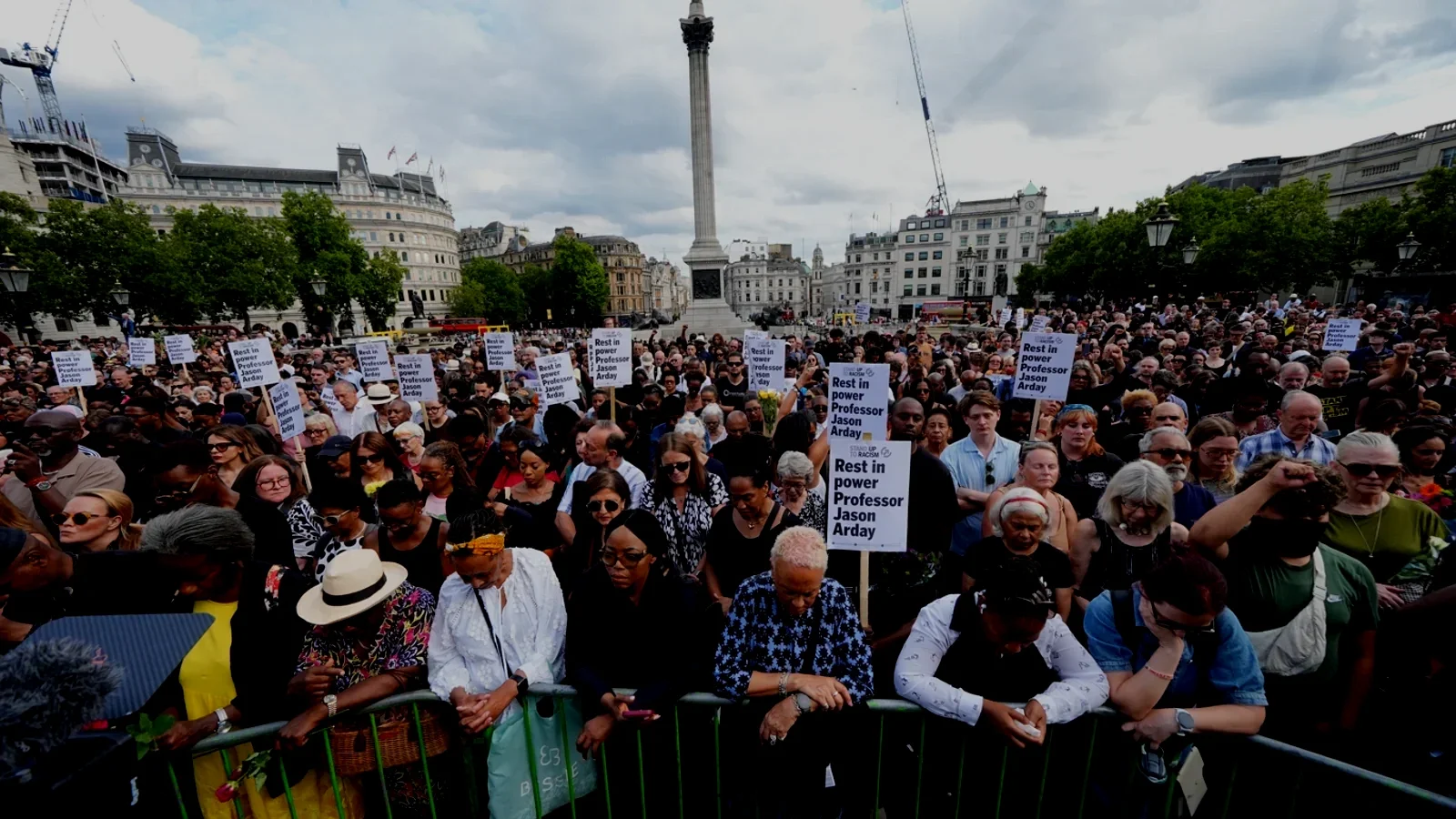
His death comes after an intensely public period of scrutiny, commentary and hostility. As a society, there is an illusion that words don’t really hurt us. Yet what we collectively witnessed prior to Professor Arday’s untimely passing is that words have a tremendous and consequential impact. When words are used to bully and harass, without regard for the person on the other end of them and without any duty of care, we are truly living in dangerous times.
We need to prioritise and redefine what duty of care looks like, particularly for Black people navigating academic and cultural spaces. Duty of care is not a wellbeing webpage or a policy document filed away. It is an active, daily obligation, and it is being failed. Racism, harassment and public pile-ons are not abstractions: they are experienced in the body and in the mind, and their cost is measured in people’s health and in people’s lives. That cost falls hardest on those who are already carrying the most, including Black disabled students and staff, whose treatment by institutions is too often violent in its indifference. Institutions cannot claim to value Black people while remaining unwilling to reckon with the mental health toll of the conditions they create and maintain.
We recognise how dangerous and destabilising it can be to navigate predominantly white spaces where you are reluctantly accepted. As creators and contributors to the fabric of culture, to the blanket of community, to the archives of history, staying and pushing for a better world through the work we do can be profoundly painful, exhausting and punishing.
We urge every institution to consider their commitments to their Black colleagues and their Black communities. We can no longer continue to provide our bodies and our minds as decoration at the risk of our lives.*
We are particularly concerned by what this tragedy reveals about the vulnerability of Black people whose lives and work are subjected to intense media scrutiny, where public exposure can quickly become a site of racialised judgement, speculation and harm. Black people should not have to endure extraordinary levels of hostility simply because we have entered spaces from which we have historically been excluded.
Here at the Black Curators Collective, our work is rooted in creating spaces for Black women and non-binary curators to connect, support one another, share knowledge, develop collaborative practices and collectively challenge the structural conditions that shape our cultural sector. We are committed to building a more interconnected and equitable ecosystem for Black curators and producers, and to supporting collective organising that prioritises the needs of Black creatives and communities.
This commitment means that we have zero tolerance for racism, racialised abuse, harassment, intimidation or dehumanisation, whether it takes place in our institutions, our workplaces, online spaces or within public discourse.
We call on cultural and educational institutions to take seriously their responsibility to create environments where Black people can work, learn and lead without being subjected to racism or harassment. This requires more than statements of solidarity. It requires meaningful action, accountability, and a willingness to challenge the structures and behaviours that enable racialised harm. There is an urgent need to collectively hold problematic institutions to account for their role in this tragedy.
At the Black Curators Collective, we will continue to build spaces of support, dialogue, collaboration and resistance. And we will continue to insist that our sector must be a place where Black people can exist with dignity, safety and freedom.
Professor Jason Arday deserved humanity in life.
To the family, friends and loved ones of Jason Arday: we stand with you in your grief, and we send our sincerest condolences for your loss. We extend our deepest condolences to all who mourn him.
A dedication in Voice ≠ Speech
Professor Arday will be honoured in the pages of Voice ≠ Speech, our journal, in Issue 02 this autumn — as we have honoured Dr Melz Owusu and Blaize Henry before him. Members of our Editorial Board are writing reflections in dialogue with our colleague and ancestor, in whatever words each of us has been able to find: an anthology of articulation, offered as a kind of vigil. His family have asked to be left alone, and we intend to honour that; this is a journal, not the press, and nothing will be published in a way that treats their grief as material. We want the way we think of him to be subvocalised — held in the inner voice, where reading happens and where speech is not required — and remembered there, for years to come.
The Black Curators Collective
This statement was written collectively by Laura Hesketh, Nikita Gill, Lisa Kennedy, Susuana Amoah and Jade Foster, on behalf of the Black Curators Collective.
* On ‘decoration’: we use this word in reference to Roger Hart’s Ladder of Participation, developed for UNICEF, in which Decoration sits at the bottom of the ladder alongside Manipulation and Tokenism. Hart’s framework was written to support and advocate for children’s agency, but it remains a vital lens for any context in which people who hold unweighted power within institutions are repeatedly asked to serve as representatives at the risk of their health and their lives.